How to take the First Steps towards Sustainability in Tourism

How to take the First Steps towards Sustainability in Tourism

HOW TO TAKE THE FIRST STEPS TOWARDS SUSTAINABILITY IN TOURISM

Image of woman at Wilga Station looking out the window at sheep and view

Moving towards more sustainable tourism is important in 2024, as the world begins to acknowledge the impact that tourism is having on the environment. Travellers have become more aware of their environmental footprint and are looking for places to stay that are making an effort to reduce the impact of their stay.

By incorporating sustainable practices into your accommodation, you can contribute to the development of your destination and be part of the growing market for sustainable tourism.

For some, the idea of moving towards sustainability can seem a bit overwhelming at first (haven’t you got enough to worry about?) but the good news is that there are plenty of easy first practical steps you can take to make your accommodation more environmentally friendly.

First and foremost, you will need to create an environmental policy, so you know what you are already doing and how you can improve.

Your policy will need to set achievable and realistic targets will enable you to continually reduce the negative impacts of your business, while increasing the positive effects your operations have on the social and physical environment.

For inspiration, check out the properties listed on Green Getaways which are similar to yours. Open and read the ENVIRONMENT drop down toggle section on their page. Some people are doing amazing things!

thala-beach-treehouse

WATER USE

• Conduct a water audit to figure out where your accommodation is consuming the most water
• Offer guests the opportunity to choose cleaning of their rooms and changing of towels every second day or on request in order to avoid water waste.


Image of hand and water


RECYCLING AND COMPOSTING

 If you intend to take responsible tourism seriously, recycling and composting are a must.
• Create a composting bin and use it to start your own garden
• Place recycling bins throughout your accommodation. Train your staff to use them properly, and leave information for guests to guide them on what should be thrown away and what should be recycled.

Image off kitchen with recycling bins

FOOD MILES

  • Source food as locally as possible and serve food that is seasonal to your area, rather than having it transported halfway across the world.
  • Serve fish that has been farmed sustainably.
  • Look for food items that have a fair trade label.
Image of bread at a market


ENERGY USE

• Install solar panels to generate your own clean electricity.
• Use timer switches and thermostats to control your heating system’s output.
• Get low-energy lighting like fluorescent tubes or LED light fittings.
• Purchase energy-efficient rated units when replacing appliances.

SolarPanels

SUPPORT THE LOCAL ECONOMY

  • Source your supplies locally to support your local community
  • Recommend local guides and suggest to your guests that they eat at locally owned restaurants. Keeping the profit in the community will both ensure that the destination continues to exist and the local community can prosper.
  • Supply information about public transport in the local area.
  • Promote growth within your local economy by hiring nearby residents and using as many locally-sourced goods and supplies as possible.
  • Showcase local products that are unique to your area, or partner with nearby businesses to cross promote local goods and services.
  • Plant indigenous trees/shrubs in your area.
  • Provide information to guests to help them understand the local ecosystem and to minimise damage to the environment, wildlife or marine ecosystems.

SUPPORT FOR LOCAL CHARITIES OR CONSERVATION GROUPS

• Donate to local conservation groups, and invite your guests to do the same
• Offer information about local conservation efforts to tourists who are interested in getting involved.
• Invite local conservation leaders to lead tours of the local environment, (or lead them yourself) and invite guests to come along and take the opportunity to learn more about conservation.

Image of kakadu tour

NEW POSSIBILITIES

The positive impact made by these changes will make your efforts worthwhile.

Quite aside from the knowledge that you are helping to protect the environment, working towards sustainability will help your business become more successful as new marketing opportunities open up in this evolving and expanding space.

Sustainable, responsible, green, eco friendly… these words are appealing to more and more travellers who want to reduce their impact on the planet, but don’t necessarily know how to go about it. Your accommodation business can take the opportunity to allow them to do this.

And if you would like to go further, you can find more information at:

Global Sustainable Tourism Council

Ecotourism Australia Strive4Sustainability Scorecard

Booking.com Sustainable Travel Program

OUR SUPPORT

Green Getaways totally supports the Strive 4 Sustainability Scorecard program offered by Ecotourism Australia.

Any accommodation business which has achieved a 50+ score will be able to list with Green Getaways Australia at no cost with their achievements recognized on our site.

You can apply for the SCORECARD 4 SUSTAINABILITY here on the Ecotourism Australia website. And don’t forget to come back to us to let us know for your free listing.


Images supplied courtesy of Tathra Beach Eco Lodge, Unsplash, Cooinda Lodge and Wilga Station Farmers Hut Credit: Destination NSW

Author: Amanda Lambert
February, 2024

 

Changes to the Booking.com Travel Sustainable Program 2024

From March 25 2024, Booking.com will instigate changes to the Travel Sustainable Program.

What is the Strive 4 Sustainability Scorecard?

The Scorecard aims to foster genuine, sustainable experiences for travellers while promoting sustainability within the tourism industry. The scorecard is not a certification or accreditation: it is a series of benchmarks for businesses to strive for sustainability, based on globally recognized criteria.

What is the Travel Sustainable Program by Booking.com?

The Travel Sustainable Program by Booking.com recognizes and supports the efforts and investments on a property’s sustainability journey – whatever stage they may be at. There are three different levels, or, for those with eligible third-party certification, a further dedicated level.

Slow Travel in 2024

Slow travel has become synonymous with responsible or conscious tourism. This approach prioritizes sustainability and immersing oneself fully in a destination. Slow travel contrasts with the rapid pace and carbon-intensive nature of conventional tourism, instead utilising low-impact, eco-conscious accommodation and transportation, thereby minimizing traveller’s carbon footprint.

Covid-19 Aftermath : Is this an opportunity for sustainable travel?

COVID-19 challenges us to think about the type of consumption that underpins the unsustainable ways of the travel and tourism industries. But will it also provide an opportunity for change?

Responsible Travel and Cultural Sensitivity

Following a few guidelines will enrich your travels and turns precious moments of interaction into lifelong memories.

Responsible Travel Trends

Responsible tourism has risen further up the agenda and is becoming an integral part of travel decisions and planning.

How to take the First Steps towards Sustainability in Tourism

For some accommodation owners, the idea of moving towards sustainability can seem a bit overwhelming at first, but the good news is that there are plenty of easy first practical steps you can take to make your accommodation more environmentally friendly.

Working Towards Sustainable Tourism Accommodation: First Steps

If you intend to take responsible tourism seriously, start with these few first steps…

Green Hospitality Resources – what to look for

If a product has lots of plastic packaging and packing, chances are the company is not really interested in being environmentally responsible.

Hotel Amenities – What you need to know

What denotes luxury to you when it comes to hospitality amenities? For international hotels, the meaning is changing…

We acknowledge custodians of Country and their continuing connection to land and waters across Australia. We pay our respects to Elders past and present and extend that respect to all Aboriginal and Torres Strait Islander peoples today.


© Green Getaways Australia 2025 | All rights Reserved.

Working Towards Sustainable Tourism Accommodation: First Steps

Working Towards Sustainable Tourism Accommodation: First Steps

How to Be a Responsible Tourism Operator: First Steps

In 2019, the way forward for many travellers is responsible tourism. Responsible travel is a new type of travelling, for people who want to reduce the impact that they are having on the environment as they travel. And these travellers are looking for places to stay that will help them minimise their impact on the environment.

Although this may seem a bit overwhelming at the beginning, there are a few practical steps you can take to make your accommodation more environmentally friendly. First and foremost, you will need to create an environmental policy, so you know what you are already doing and how you can improve. Your policy will need to set achievable and realistic targets will enable you to continually reduce the negative impacts of your business, while increasing the positive effects your operations have on the social and physical environment.

Water use

• Conduct a water audit to figure out where your accommodation is consuming the most water
• Offer guests the opportunity to choose cleaning of their rooms and changing of towels every second day or on request in order to avoid water waste.

Support for Local Charities or Conservation Groups

• Donate to local conservation groups, and invite your guests to do the same
• Offer information about local conservation efforts to tourists who are interested in getting involved, demonstrating how much you care about your local community
• Invite local conservation leaders to lead tours of the local environment, (or lead them yourself!) and invite guests to come along and take the opportunity to learn more about conservation.


Recycling and composting

If you intend to take responsible tourism seriously, recycling and composting are a must.
• Create a composting bin and use it to start your own garden
• Place recycling bins throughout your accommodation. Train your staff to use them properly, and leave information for guests to guide them on what should be thrown away and what should be recycled.


Recycling bins


Responsible Use of Food

  • Source food as locally as possible and serve food that is seasonal to your area, rather than having it transported halfway across the world.
  • Serve fish that has been farmed sustainably.
  • Look for food items that have a fair trade label.


Energy Use

• Install solar panels to generate your own clean electricity.
• Use timer switches and thermostats to control your heating system’s output.
• Get low-energy lighting like fluorescent tubes or LED light fittings.
• Purchase energy-efficient rated units when replacing appliances.


Responsible tourism will help your business become more successful as new marketing opportunities open up in an evolving and expanding space.


Local Economy

  • Source your supplies locally to support your local community
  • Recommend local guides and suggest to your guests that they eat at locally owned restaurants.  Keeping the profit in the community will both ensure that the destination continues to exist and the local community can prosper.
  • Supply information about public transport in the local area.
  • Promote growth within your local economy by hiring nearby residents and using as many locally-sourced goods and supplies as possible.
  • Showcase local products that are unique to your area, or partner with nearby businesses to cross promote local goods and services.


Grevillea

Local Environment

  • Plant indigenous trees/shrubs in your area.
  • Provide information to guests to help them understand the local ecosystem and to minimise damage to the environment, wildlife or marine ecosystems.


The positive impact made by these changes will make your efforts worthwhile.

Quite aside from the knowledge that you are helping to protect the environment, responsible tourism will help your business become more successful as new marketing opportunities open up in an evolving and expanding space. Sustainable, responsible, green, eco friendly… these words are appealing to more and more travellers who want to reduce their impact on the planet, but don’t necessarily know how to go about it. Your accommodation business can take the opportunity to allow them to do this.

And if you would like to go further, you can find more detailed information at the Global Sustainable Tourism Council 


Green Hospitality Resources – what to look for

Green Hospitality Resources – what to look for

Packaging

Look for: The biodegradable or recyclable nature of packaging.

If a product has lots of plastic packaging and packing, chances are the company is not really interested in being environmentally responsible. Look for products that come without excess packaging or, if they do, use a simple recyclable cardboard box. We do not consider any product that is destined for landfill as environmentally friendly.

Plastic: A number of companies are now offering products made with 100% post consumer recycled plastic. Some have been enhanced with a product called EcoPure, to enhance biodegradability.


Organic Certification

Look for: Genuine standards

There is no universal standard for “certified organic”. Every organic certification processor has a different set of standards and a different list of what they will allow in a product and what they prohibit. It’s also an expensive process, which deters many brands (with product made from 70 – 100% organic ingredients) and suppliers (with genuine organic ingredients) who don’t have the budget to go through the certification process, or who question the efficacy of the process.

Australian Certified Organic

The local standard in Australia is recognised as one of the most stringent in the world. In Australia this includes no synthetic ingredients at all (including no nature identical). According to ACO, in Australia, for a product to be able to call itself certified organic, it must contain at least 95 percent organic content. Again the formula should be free from parabens, sodium lauryl sulfates, genetic modification and petroleum derivatives. If in doubt, always check for the logo from an accredited certifier. Accredited organic certifiers: ACO (Australia), OFC (Australia), Ecocert (Europe), USDA Organic (US), NASAA (Australia), Demeter (Australia), TOP (Australia) and Soil Association (UK).


Ingredients

Look for: The absence of ingredient listed below.

The absence of GMO, parabens, phenoxyethanol, nanoparticles, silicon, PEG, synthetic perfumes and dyes, animal-derived ingredients (unless naturally produced by them: milk, honey, etc.).

N.B Some ingredients very frequently found in cosmetics (water, salts, minerals) cannot be certified as organic because they are not sourced from farming. For example, shampoos and some creams, mostly composed of water, contain between 10% and 40% organic ingredients, and always 95% natural ingredients. An essential oil, which does not contain water, can be up to 100% organic ingredients.


Animal testing

Look for: No animal testing at all.

Always check for a No Animal Testing claim on products. Companies who use organic ingredients but test on animals may not be everything they claim to be.


HOSPITALITY PRODUCTS

Below are examples of the types of products currently available. Please let us know if you have more recommendations.

DISCLAIMER: We do not endorse any particular product. The following are examples of the types of products that are available.


LATHER


Green Hospitality resources


Available in 30ml tubes and 60ml bottles. Made with 100% post consumer recycled water bottles and enhanced with EcoPure, LATHER delivers their product in a more environment-friendly package than many others.

Paraben-free
DEA/TEA-free
Free of synthetic colours and fragrances
Biodegradable formulations
Propylene Glycol free
Never tested on animals

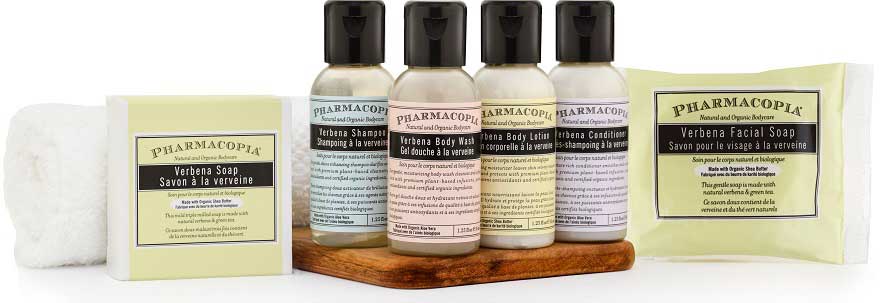
PHARMACOPIA


Green Hospitality resources


“Made with post consumer recycled bottles and all materials are recyclable. Contains certified organic ingredients. No animal by-products, no honey, lanolin or beeswax Paraben and toxin-free: No synthetic fragrances, fillers or colours.”


ECO BOUTIQUE


eco-b-mixed-header


ECO BOUTIQUE seeks to address the problematic issue of plastic waste, the demand for natural ingredients and gentle skin-friendly products.

The recyclable bottles are 97% derived from post-consumer recycled plastic, and the soap is wrapped in paper from a sustainable source. The formulations contain organically certified extracts of green tea, and natural aloe leaf and are gently scented with Mimosa.

Products DO NOT CONTAIN: SLS, SLES, Parabens, DEA, Paraffin Oil, Artificial Colours, Silicones, GM ingredients.


AQUAMENITIES


aquamenities


AQUAMENITIES has created a soap shampoo dispenser fixture designed to provide accommodation properties with a solution to help reach sustainability goals.
The tamper-resistant fixture also allows hoteliers to feature a choice of branded and customized amenities for guests while helping to limiting the properties’ carbon footprint.

SaveSave

SaveSave

SaveSave

SaveSave

Hotel Amenities – What you need to know

Hotel Amenities – What you need to know

GREEN NEWS
Hotel Amenities
Take 3 for the Sea
Green Getaways

September 2018

What denotes luxury to you when it comes to hospitality amenities?

With their beautiful amenities lined up on the bathroom countertop, most hotels do not immediately conjure up visions of sustainability.

But the fact is that many hotels have been making efforts to adopt better environmental practices. This is to answer the growing demand from guests for alternatives to the excessive and wasteful practices in the travel industry.


hotel waste


The Times They are a-Changin’

Momentum is growing globally to minimize the use of single-use plastic in the travel industry. Many travellers today are well aware of the issue and understand the need to reduce waste. That means plastic bottles of water, disposable cups, plastic laundry bags and small throw-away plastic bottles of shampoos and conditioners are starting to disappear.

“It is estimated that, worldwide, hotels dispose of more than 10 billion partly-used individually-packaged bars of soap and bottles of liquids every year. ”

What are hotels doing to reduce their plastic bathroom waste?


Hilton Hotels

“Many of our younger guests are particularly concerned about efforts to protect the environment,” says Maxime Verstraete, Hilton’s vice president of corporate responsibility.

In a survey of about 72,000 guests conducted recently by Hilton,
33% responded that they actively seek information on hospitality companies’ sustainability practices before booking. And, of that cohort, 60% conduct their own research into companies’ social, environmental and ethical practices, even if the information is not easily accessible.

“Millennials, they get really passionate about these things,” Verstraete says. “That is very important to us because these are our future travellers.”

Hilton has made a commitment to cut its environmental footprint in half by 2030.

As new brands get introduced, Hilton is adopting more stringent environmental standards. Canopy by Hilton, for instance, does not provide plastic water bottles. Instead, it has water filtration systems throughout and refillable water bottles and the new Tru by Hilton brand will have bulk dispensers for amenities rather than tiny bottles.

The Marriott

Marriott is replacing individual, small amenity bath bottles at five select-service brands in North America with recyclable 8.5-oz. dispensers containing Paul Mitchell Tea Tree products.

Marriott Paul Mitchell toiletries

Marriott Hotel’s Paul Mitchell Toiletries

The company expects about 1,500 hotels in North America to participate in the initiative by year’s end. That will result in the elimination of about 34.5 million bottles and 375,000 pounds of plastic in an average year. So far, 450 hotels have started getting rid of their plastic. The brands include Courtyard and Fairfield Inn. Marriott has also removed plastic straws from 50 of its hotels in the United Kingdom.

InterContinental Hotels Group

The InterContinental Hotels Group is implementing bulk-size bath amenities across many of its brands, including Holiday Inn Express, Kimpton Hotels and Restaurants, avid hotels, EVEN Hotels, Staybridge Suites and Candlewood Suites.

 Cost of Waste

What is the true cost of individual packaging waste?
Costs include:
– the initial cost for products that get thrown away when only partially used
– the housekeeping cost of daily restocking carts and rooms
– the cost of managing and paying for the waste removal for individual packaging
– and the environmental cost of continuing this cycle of waste.

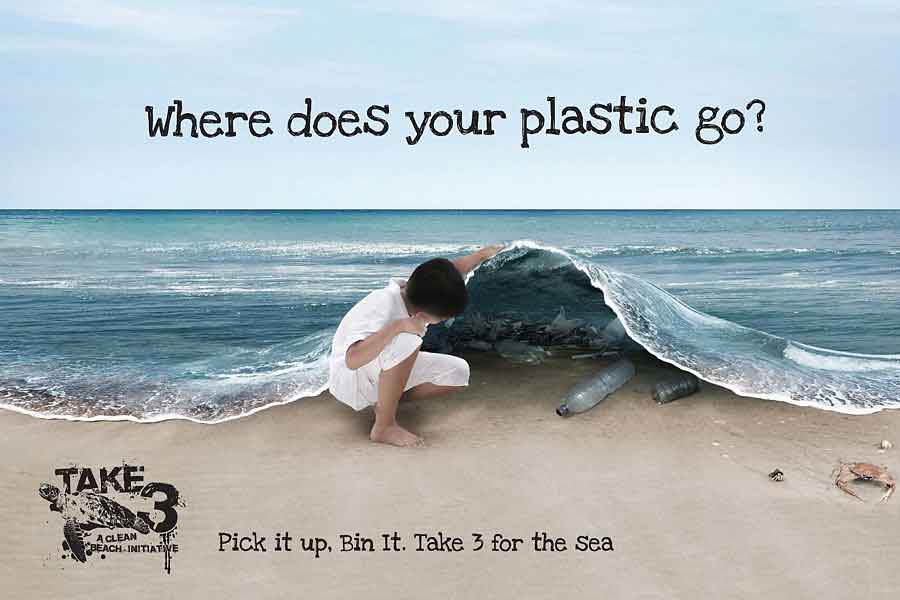
Take 3
Where Does Your Plastic Go?

Plastic Water Bottle Use: How One Hotel is Making a Difference

Plastic Water Bottle Use: How One Hotel is Making a Difference

GREEN NEWS

How One Hotel is Making a Difference

Green Getaways

October 2018

“Grab and Go” Water – the future for hotels?

Landmark Oriental Hotel makes strides towards solving the waste caused by plastic water drinking bottles.

This is a great start to solving a problem which has become a growing nightmare in the hotel tourism industry: plastic water bottle use for drinking water.

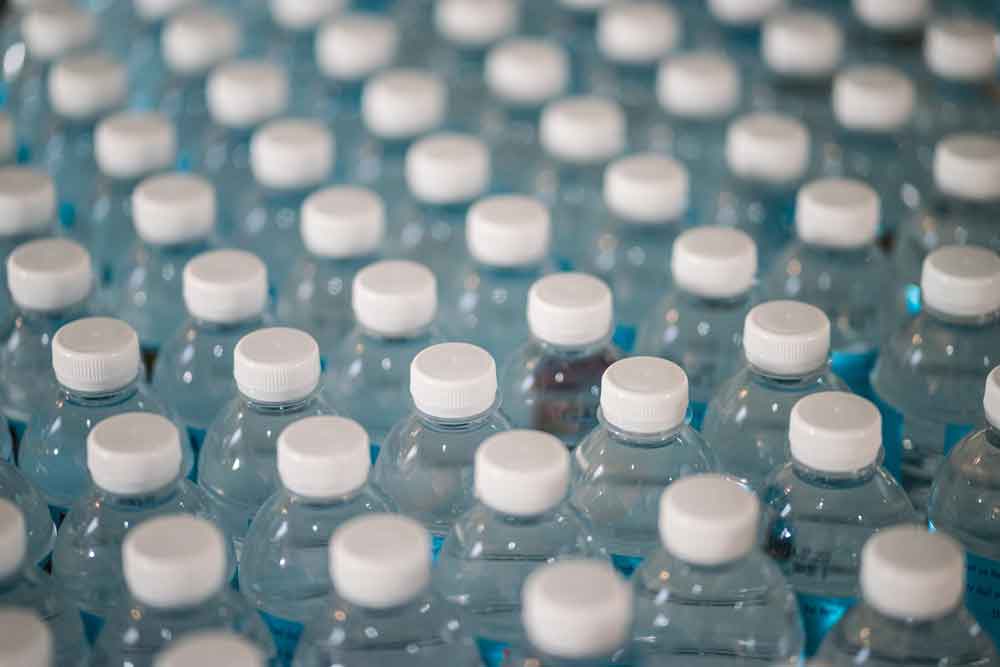
The Landmark Mandarin Oriental, in Hong Kong, has installed a water filtration system for their guests. Instead of single-use plastic water bottles in the hotel’s 111 rooms, restaurants and bars, customers now have access to filtered water in glass bottles.

Nordaq FRESH water is bottled on-site using local tap water, which is purified as it passes through a patented filter system. The water is cooled and served “still or sparkling”in reusable glass bottles.


Hotel Glass Water Bottles


“The Landmark Mandarin Oriental, Hong Kong is proud to be the first hotel in the city to invest in the Nordaq FRESH system that enables water to be filtered on the hotel’s premises, significantly reducing the environmental impact associated with delivering water.” says Archie Keswick, General Manager of the hotel.

“Current use of plastic is simply not sustainable,” Mr Keswick says. “5.2 million plastic bottles are disposed of in Hong Kong daily. Green Earth estimates that as more than enough to fill 2 Olympic-sized swimming pools. We were using over 500 bottles a day and knew the best way to stop that was by collaborating with Nordaq Fresh.

” We were using over 500 bottles a day.”

“Sustainability doesn’t mean sacrificing luxury,” says Archie Keswick.

“We believe we can protect the environment and maintain the highest level of guest experience and, as an industry leader, we are keen to play our part. Key to the overwhelming success of our different initiatives is explaining our commitment in an encouraging, engaging way.”

The in-house filtered, purified premium bottled water has already proved extremely popular with hotel guests well aware of the urgent need to reduce plastic waste and our carbon footprint.

water dispenser

The hotel has now also introduced a new compressive ‘Grab & Go’ BPA free impact-resistant bottle. Bespoke Swell stainless steel bottles in two sizes are available for sale in the guest rooms and suites. Guests are encouraged to fill their bottles at the new free water dispenser, called the Central Oasis” in the guest lobby.

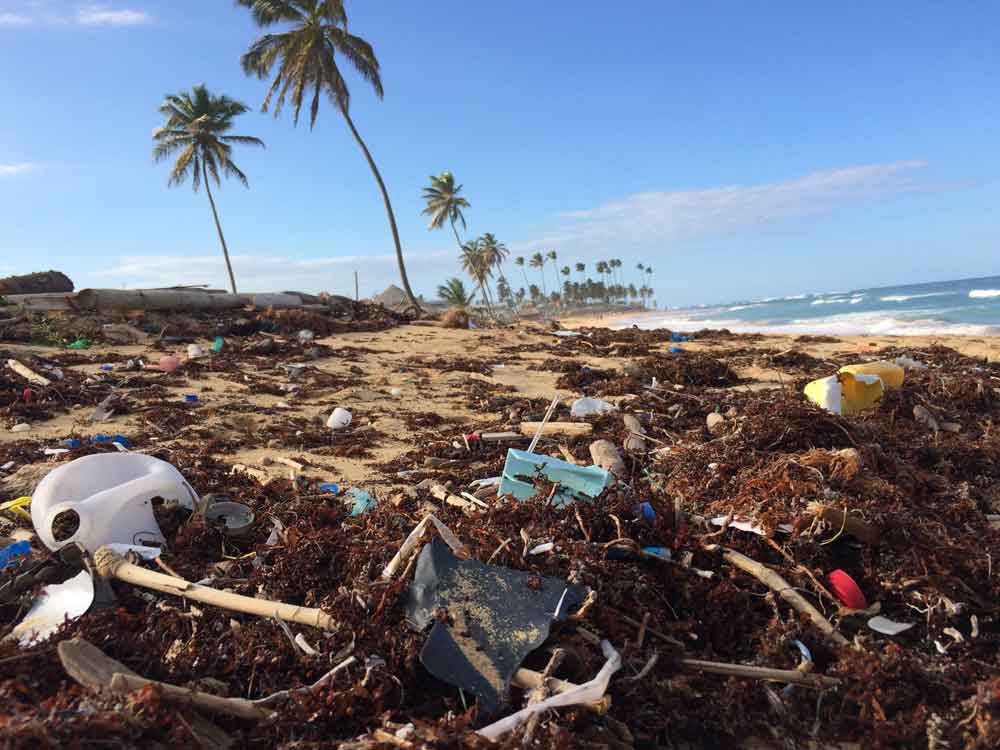
A few small steps forward – but it would be great to see other hotels follow the lead set by The Landmark Mandarin Oriental, Hong Kong. The problem of plastic waste being generated by large hotels is one which must be tackled, or we will continue to see local beaches contaminated as below in some of the world’s most beautiful destinations.

Beach Rubbish

Photo Credits

Photo by Jonathan Chng 

Photo by Dustan Woodhouse 

Photos by Landmark Mandarin Oriental Hotel, Hong Kong

Read more about the Landmark Mandarin Oriental Hotel’s initiatives …