

Changes to the Booking.com Travel Sustainable Program 2024
CHANGES TO THE BOOKING.COM TRAVEL SUSTAINABLE PROGRAM 2024
From March 25, 2024, Booking.com has changed the way that accommodation listed on their platform can display environmental claims. This is to reflect the new (and very welcome) regulatory guidelines taking place worldwide.
Booking.com introduced the Travel Sustainable program in 2021. By 2023, more than 500,000 accommodations on the platform had a “Travel Sustainable” badge.
However, the removal of the “Travel Sustainable Badge” follows pressure from the Netherlands Authority for Consumers and Markets (ACM). Booking.com is headquartered in Amsterdam. The badge was intended to help consumers find properties that are operating more sustainably. The ACM said the program “was a possibly misleading sustainability claim.”
“It implies that travelling and staying at one of the program-affiliated accommodations are sustainable, even though this is incorrect,” the regulator found. “The use of the green leaf reinforces this implication.”
They also noted that the Travel Sustainable program didn’t clearly state the basis of the scores given to properties and erroneously credited properties with measures, such as not using single-use plastics, that were already required under European Union law, the regulator stated.
“It’s important that companies use clear, correct and relevant sustainability claims,” said the regulator’s director, Edwin van Houten, in a statement. “Consumers are more and more aware of the impact that they themselves have on the climate, including when travelling. That is why, when choosing accommodations, consumers must be able to understand and rely on the sustainability claims that are used.”
Across the globe, efforts are underway to crack down on greenwashing, where companies mislead consumers with false claims of environmental friendliness.
In Australia, the Australian Competition and Consumer Commission (ACCC) has rolled out preliminary guidelines to ensure businesses make genuine sustainability claims. These guidelines are designed to safeguard both consumers and the environment, while championing truly eco-conscious businesses that can substantiate their claims.
In Europe, the recent introduction of the Green Claims Directive by the European Commission sets a stringent standard. It mandates that environmental claims must meet specific criteria and undergo independent verification by third-party assessors. Terms like ‘environmentally friendly’, ‘natural’, ‘biodegradable’, ‘climate neutral’, and ‘eco’ will require solid evidence to back them up. Additionally, carbon offsetting schemes, often used to claim ‘carbon neutral’ status, will no longer suffice as proof.
In the United States, the Federal Trade Commission (FTC) is considering significant revisions to its Green Guides, which provide standards for companies making environmental assertions. While these guides aren’t legally binding, they serve as a beacon, shedding light on deceptive marketing practices surrounding sustainability and environmental responsibility, potentially leading to violations of federal law.
In anticipation of these regulatory changes, Booking.com will be adapting their approach towards sustainability claims starting March 25, 2024.
The focus at Booking.com has now shifted toward third-party certifications for recognizing an accommodation’s efforts to operate more sustainably. Incoming regulations are helping set the framework for sustainability standards, bringing more clarity on sustainability communications and making it easier for travellers to make informed decisions.
The three Travel Sustainable names and levels are being removed to highlight the significance of third-party certifications. This shift ensures consistency and clarity to make it easier for travellers to make informed decisions that are more sustainable.
While the Travel Sustainable branding and levels will no longer be displayed, the practices of accommodation properties will still be visible to guests on their property page. For partners with third-party certifications, these will be displayed with a clear label. Plus, travellers will have the option to filter for properties with a third-party certification.
Third-party certifications signify the highest standard of recognition for a commitment to sustainability. These certifications enhance credibility and ensure confidence in the sustainability efforts of your property. Certifications offer clarity on sustainability communication and make it easier for travellers to make informed decisions.
Why are certifications important?
Becoming third-party certified demonstrates the commitment of an accommodation owner to sustainability and boosts your credibility. It also aligns with travellers’ growing preference for sustainable properties.





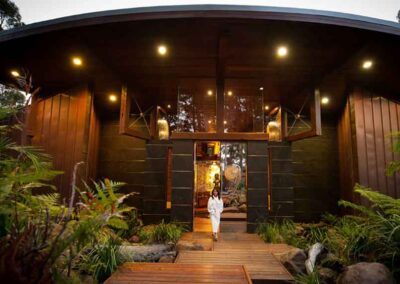





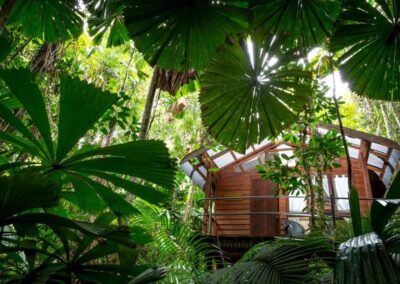

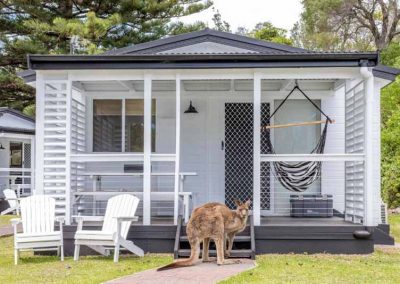


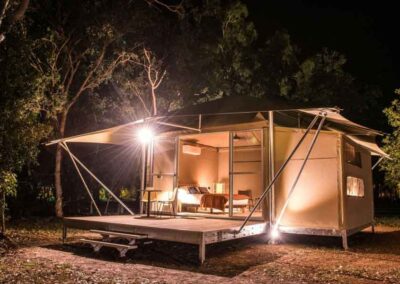
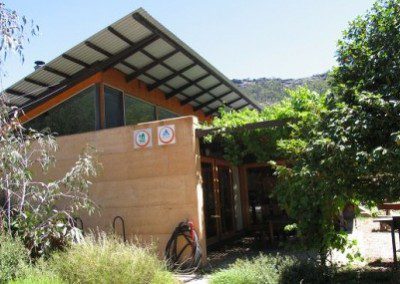
Which 3rd Party Sustainability Certifications are Recognized by Booking.com?
These vary according to the country where the accommodation is listed.
For accommodation in Australia, Ecotourism Australia is the certifying body.
Booking.com says that if you’re certified by one of the groups listed above but don’t see your certification on your property page, follow these steps:
- Sign up to www.because.eco by using your work email to create a user profile
- You’ll be asked to connect to your company. Search for your property’s name to claim it as your company
- Click “Connect.” Go to “General Information,” then the “Sales Channels” subsection, where you’ll see “Booking.com.” You’ll need to edit that section and add your Booking.com property ID
- Then the process will be complete. You should see your certification listed on Booking.com within seven days
If you can’t find your property’s name while creating a profile on www.because.eco, contact the organization you’re certified with and ask them to make sure your certification information was sent to BeCause.
We’re working to add info from more certification bodies to our platform. If you hold a sustainability certification from another organization and would like to display it on your property page, you can ask the certification body to contact BeCause with the request. Note that not all certifications are accepted.
Green Getaways supports the changes being made to the Booking.com Sustainable Travel program to move towards 3rd Party Certification for accommodation.
Want more information about improving the sustainability of your accommodation in Australia? You can also read about the Strive 4 Sustainability Scorecard from Ecotourism Australia here.
You can find more information about Booking.com’s program at the BOOKING.COM TRAVEL SUSTAINABLE HANDBOOK
Author: Amanda Lambert
March, 2024


We acknowledge custodians of Country and their continuing connection to land and waters across Australia. We pay our respects to Elders past and present and extend that respect to all Aboriginal and Torres Strait Islander peoples today.

Moving Towards Sustainability: Australian Hotels

Moving Towards Sustainability:
Australian Hotels take action to become more sustainable.
A number of hotels in Australia are leading the pack when it comes to working to improve sustainability in their business and operational practices.
Changes have been a long time coming in Australia, with the Alto Hotel on Bourke in Melbourne being one of the few hotels to totally embrace the concept in the last decade. But others are starting to make changes to their business model to move towards sustainability. In this article we highlight a few of the best environmental practices in Australian hotels.

What makes a hotel more sustainable?
Some of the 10 best sustainability trends and initiatives for hotels are relating to the following areas:
- Energy conservation
- Amenities (no little bottles adding to the world’s trash)
- Waste reduction and efficiency
- Cleaning products used wisely with minimum impact on the environment
- Local food products offered at the hotel restaurant
- Guests encouraged to make sustainable decisions
- Promotion of local culture
- Water conservation
- Operational changes and green teams
- Promotion of sustainable means of transportation
Crystalbrook Kingsley
This fabulous Newcastle hotel is leading the way in its initiatives to minimize its environmental footprint. Crystalbrook Kingsley is sustainably-led, simply sophisticated and steeped in history.
We particularly love their “Footprint Free Stays” concept. Guests can take the pledge to minimise their environmental footprint while on holiday and get $10 in dining and drinking credits.
To experience a Footprint Free Stay, guests can:
Opt out of having their room serviced
Say no to single-use plastics
Turn off unnecessary electronics
Recycle all waste items that can be re-purposed – there are separate bins separate bins in the room for guests to recycle.
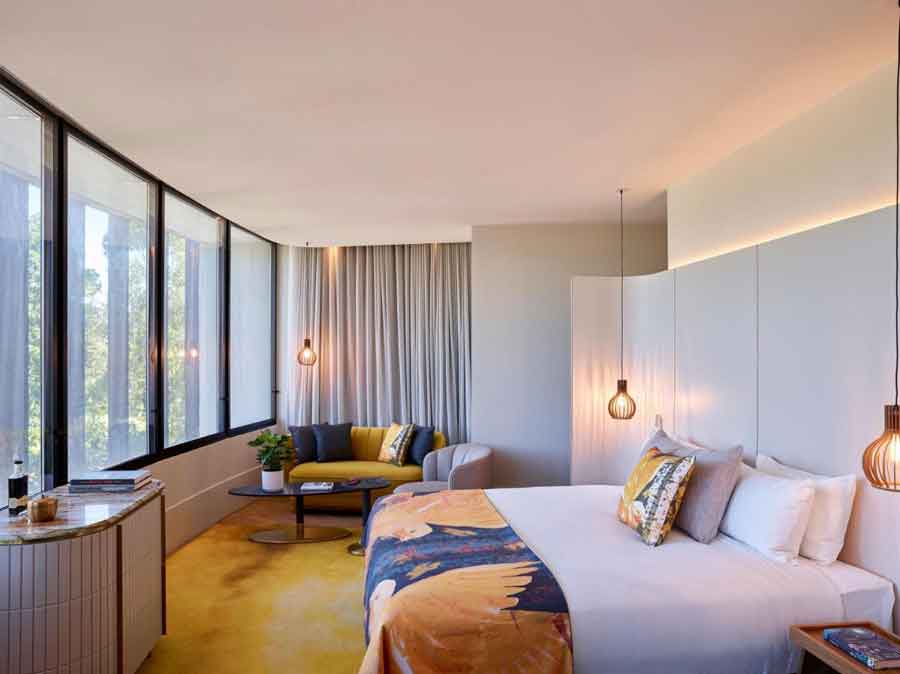
In March, 2022, the hotel group became the first in Australia to introduce 100% waste free bathroom amenities across its portfolio.
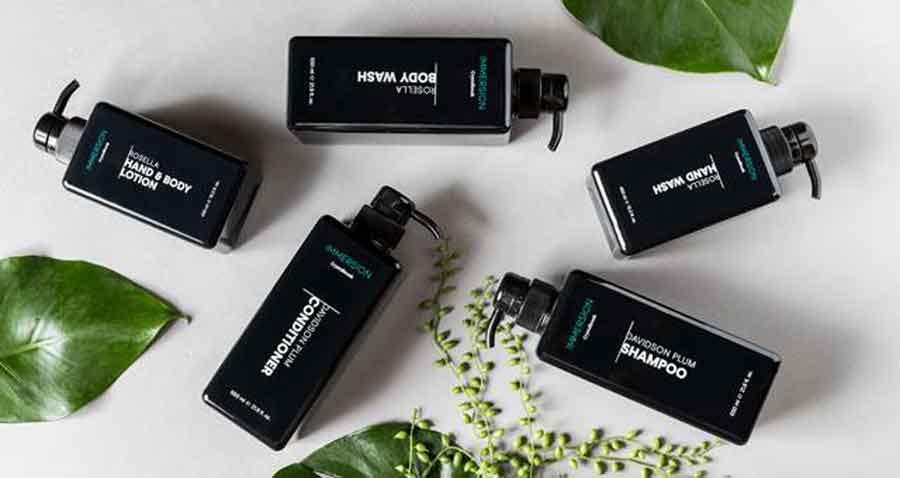
As well, the Crystalbrook Collection of hotels continues to build on an extensive recycling program including glass, cardboard and co-mingled products.
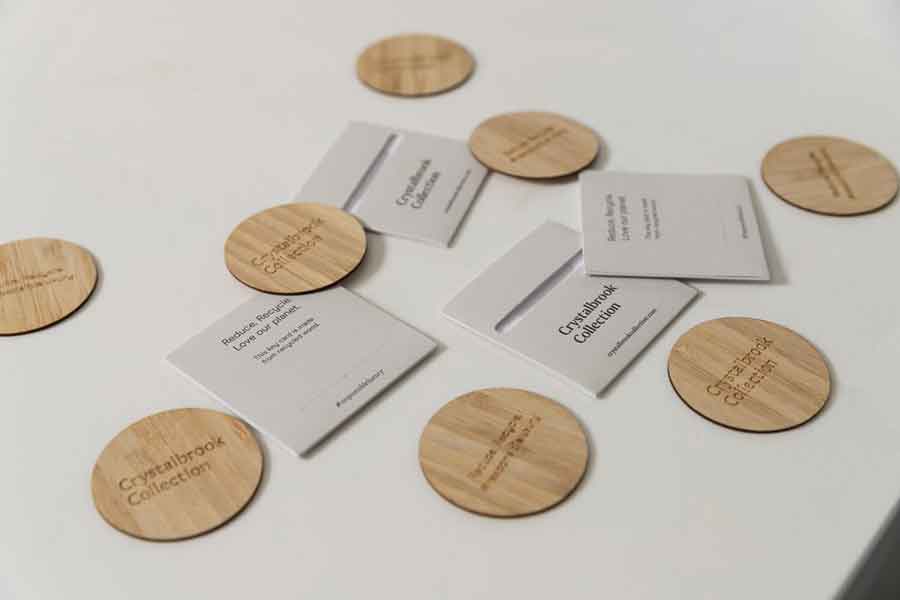
The hospitality group sources 80% of its produce from within a three-hour drive of its properties to minimise transport pollution and uses recycled products where possible such as wooden guest room key cards and upcycled coat hangers.
At the restaurant, guests can read the “Climate Calorie” info of selected dishes, including whether the ingredients in each dish are locally sourced within a 3 hour drive, sustainably grown or caught, are culturally considered, using native ingredients and working with indigenous producers, consciously reduce waste using the whole ingredient and is supplied to the restaurant in eco-friendly packaging.
Read more about Crystalbrook Kinsgley and the hotel’s sustainability initiatives.
Amora Hotel Jamison Sydney
This 5 star Sydney hotel is leading the way in its initiatives to minimize its envionmental footprint. They have committed to reducing their carbon footprint by 40% by 2030 and meeting the Paris Agreement Goals of Net Zero emissions by 2050. Setting the standard for other Australian hotels to follow with their sustainability initiatives.
Much of tourism’s environmental footprint is embedded as carbon in the resources purchased, processed and consumed. The Amora Hotel Jamison Sydney monitors their resource use and apply best green practices to limit wastage of resources in real-time and share updates hourly with guests and staff.
They have turned sustainability into a better guest experience by giving each guest My Green Butler, a free service that advises guests on wellness, how to improve their comfort, shares resource use feedback, offers energy and water-saving tips, whilst also detailing of our fundraising for nature.
Like most hotels, they invite guests to re-use their linen and towels, which minimises laundering linen. Waste is sorted and wherever possible, recyclables are reused.
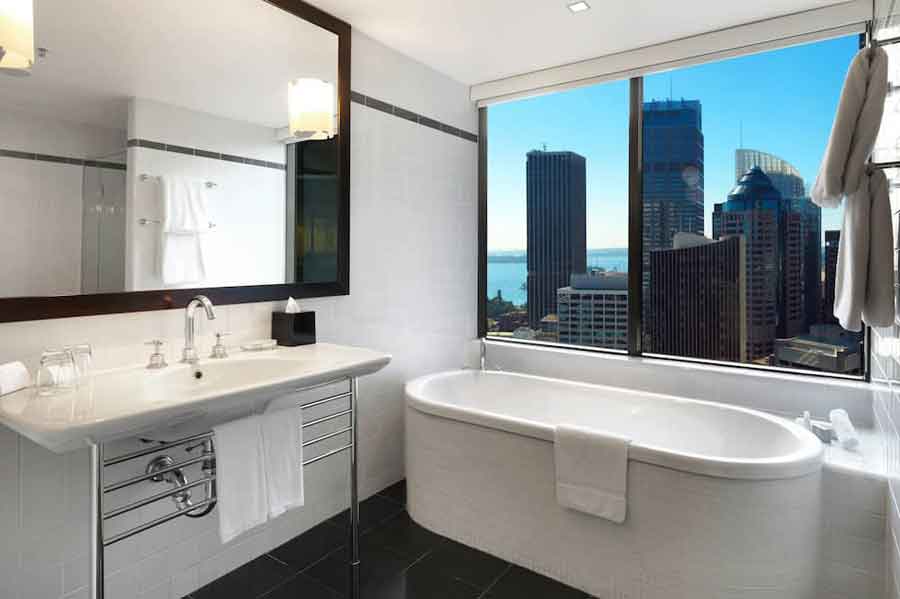
Amora Hotel Jamison Sydney is investing in more energy-efficient equipment across the hotel, and they monitor electricity use every minute to guide in conserving energy and limiting waste. They encourage their environmentally conscious guests to take advantage of the two Tesla Stations conveniently located in the hotel car park.
Amora Hotel Jamison is set to offer an innovative Green Event service for conferences, meetings and weddings. Event organisers, delegates and guests can help to conserve resources by collaborating with staff to minimise room temperature cooling/heating changes and avoid material wastage. Menus are designed around seasonal local produce and serving beverages in recyclable/re-usable containers. This way no single service plastic items nor plastic water bottles are used.
Read more about Amora Hotel Jamison Sydney and their sustainability initiatives…
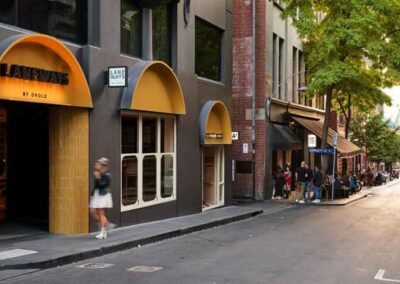
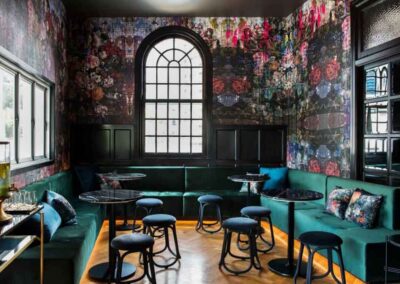
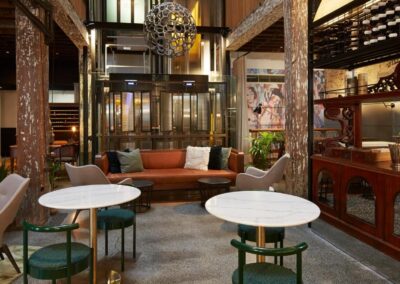
Alto Hotel on Bourke
Guest involvement at the Alto Hotel in the Melbourne CBD is welcome, yet not necessary as most systems and initiatives are designed to work automatically without any effort from their guests.
The Alto Hotel is a carbon neutral hotel, powered by 100% renewable energy and leads as one of Melbourne’s few resource smart and environmentally friendly rated hotels. They have reduced their carbon footprint to an average of 13.5kg per room, compared to estimate of 24-26kg as set by the Sustainable Tourism Cooperative Research Council. Their initiatives have resulted in several awards for environmental and hospitality excellence.
Rooms are provided with dual-chamber waste bins and guests are encouraged to help by separating their waste into recyclable and general waste. Other initiatives to vastly minimise their waste output, includes:
• Installing body wash, moisturiser, shampoo and conditioner dispensers in showers rather than using disposable containers. All toiletries used are biodegradable.
• Using dual chamber eco-bins in all rooms where guests can sort their recyclables.
• Processing all organic waste on the premises, the worm castings being used as fertiliser.
• Using recycled paper and toner cartridges in the offices.
• Using recycled toilet paper and facial tissues.

Alto Hotel in conjunction with Melbourne Rooftop Honey and 9 other inner city beekeepers is part of a project to ensure the survival of bees in Melbourne urban areas. Approximatley 65 per cent of agricultural production in Australia relies on the pollination efforts of wild bees and managed hives. Guests are then offered honey from the hotel’s own rooftop beehive & fresh herbs from the planter box garden.

Energy conservation is another area where the Alto Hotel on Bourke excels. Energy consumption of 37 megajoules per guest per night is far below the best practice target of 140 megajoules – an amazingly small amount, demonstrating the benefits of their energy conservation initiatives. This is achieved through a vast array of measures to minimise the hotel’s energy consumption:
• Card operated power in all rooms.
• 6-star rated inverter air conditioners that use 40% less power than non-inverter air conditioning.
• “Green tinted” triple glazed windows that absorb UV rays and keep guest rooms cooler.
• Purchasing 100% “Green Power”.
• Double insulation which improves sound proofing, and also saves on heating and cooling.
• Windows that can be opened completely to improve air flow and reduce the need for air conditioning.
• 100% of primary lighting and 70% of secondary lighting uses compact fluorescents.
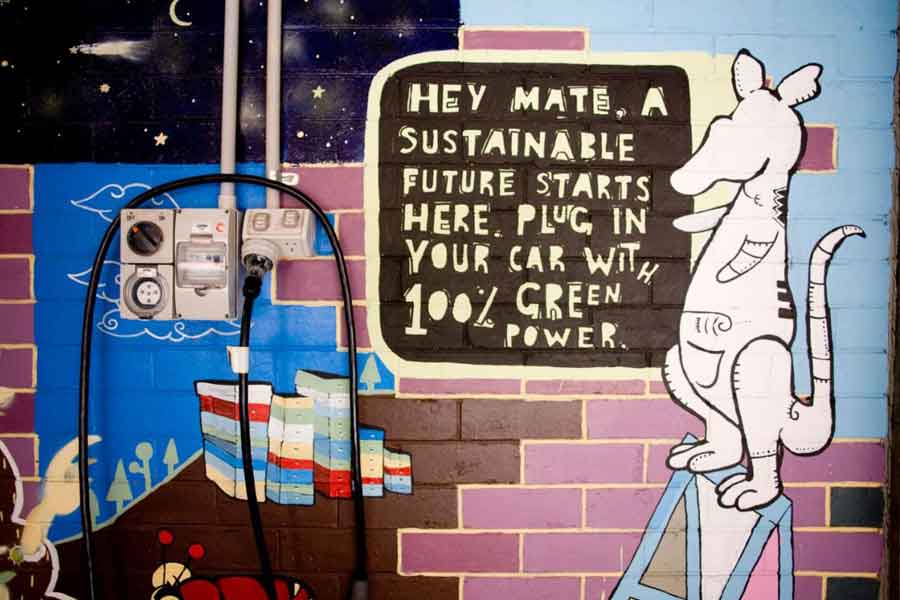
The Alto Hotel also offers free parking for guests arriving with electric or hybrid vehicles with free recharging from 100% green energy.
Read more about the Alto Hotel on Bourke and their green hotel initiatives…





Hotel Toiletries: A Change for the Better?
HOTEL TOILETRIES
A Change for the Better?
The team at Green Getaways Australia is often contacted by accommodation operators looking to find the best hotel toiletries for their accommodation properties.
What should we look for? How do we know if the products are genuinely eco-friendly? Which is more important: the packaging or the ingredients? What should we do with the partially used bottles?
When travelling, most hotel guests have expected hotel toiletries and mini amenities in their bathrooms, even when staying at budget hotels. At the other extreme, when staying at luxury properties, many guests expect luxury bathroom amenities, including shampoo, conditioner, soap, lotion, mouthwash, sewing kits, shower caps, vanity kits, slippers – even shoe shine.
This has to change.
Why is this a growing problem?
The world has now reached a tipping point when it comes to plastic waste. Hotel bathroom amenities are in the firing line, as many guests question the damaging environmental aspect of their use and the waste created by the avalanche of plastic bottles being used on a daily basis throughout the world.
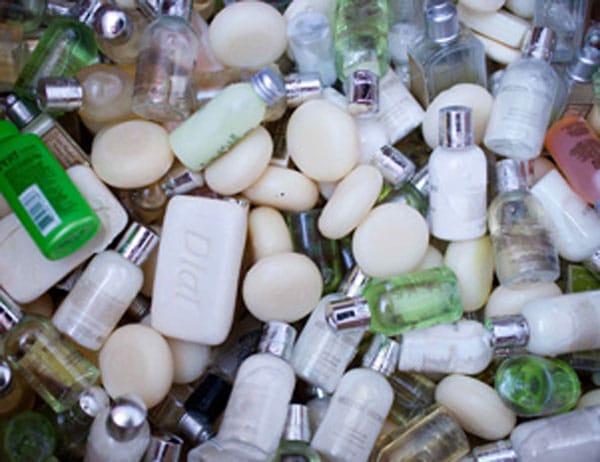
Every day millions of bars of soap and bottles of shampoo, conditioner, body wash and moisturisers are used in hotels around the world. On average, each bar of soap and each bottle of liquid becomes waste when only 15 percent is used. These partially used toiletries are then scooped up by the cleaning staff, thrown into bin bags and sent off to landfill sites.
Research shows that up to 95% of the plastic used in your hotel room end up in landfill where they sit for hundreds of years. adding to the 20 million tonnes of garbage added to landfill in Australia alone. The top 300 hotel groups in the world alone dispose of an estimated 5.5 billion amenity bottles and caps every year.
More waste not only adds to the ever-growing problem of landfill, but it translates to higher garbage removal costs for the hotel and also makes it difficult for hotels to meet environmental standards that their guests are now coming to expect.
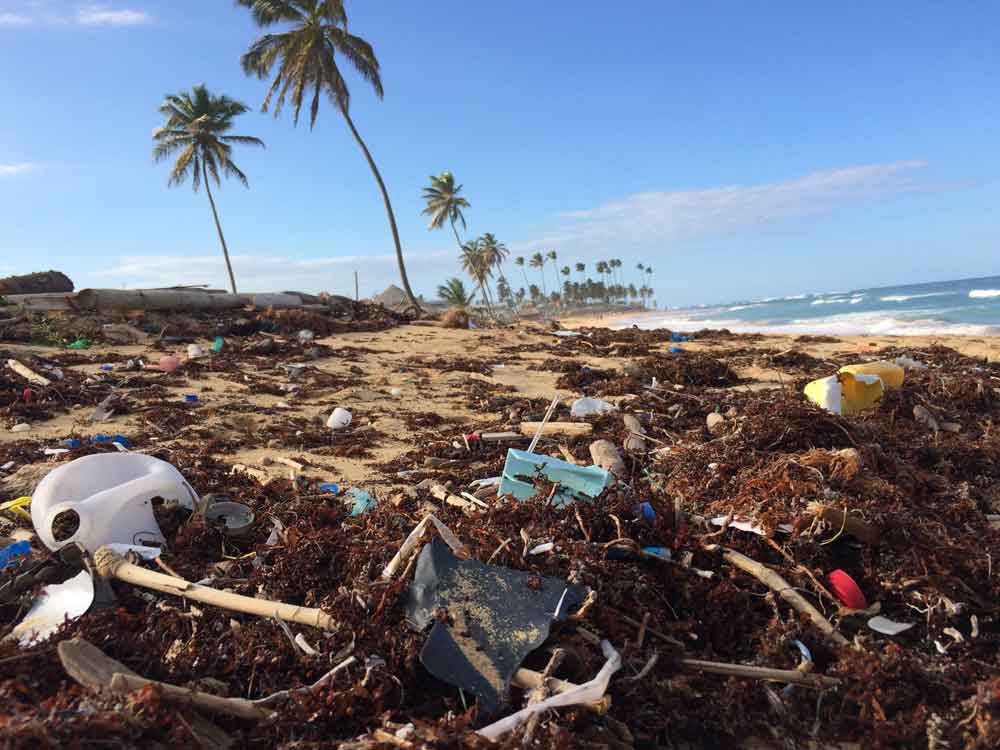
With shocking images circulating in recent years of beaches awash with plastic waste, many hotels are hearing the message and taken initiatives to reduce their use of polluting and wasteful material materials – in particular, plastic.
Plastic waste has wreaked havoc on tourist destinations around the world. Earlier this year, authorities in Bali, Indonesia, declared a “garbage emergency” because of the amount of plastic washing up on a nearly 4-mile stretch of beach on the island’s west coast.
“The visibility of plastic waste in our community is becoming much more prevalent, especially in the travel industry,” says Denise Naguib, vice president of sustainability and supplier diversity for Marriott International. “It’s much more visible not to the microscopic portion of the public paying attention to these things, but to everyday travellers.”

What’s with all the packaging? What does excess plastic packaging say about the environmental responsibility of the hotel where you are staying? This was the “stuff’ put out for us on a one night stay in Europe a few years ago.
“The top 300 hotel groups in the world alone dispose of an estimated 5.5 billion amenity bottles and caps every year.”
The Solutions
Hoteliers have several choices if they want to provide their guests with more environmentally responsible bathroom amenities. Let’s look at the options for both hotels and guests – both of whom need to be involved if we are going to really tackle this problem effectively.
These options include dispenser pump packs; replacing old style bottles plastic bottles with bottles made with recycled plastics – and one company is now offering a goodie bag to encourage you to take your leftover items with you to use and then recycle responsibly.
1. Refillable Dispenser Bottles
In the past, bulk liquid dispensers have been associated with poor quality.
Not any more.
Many of the world’s hippest and luxurious hotels are integrating stylish design with beautiful organic liquids formulated with natural ingredients that are totally biodegradable and safe to the environment including shampoos, conditioners and body wash.
A number of top cosmetic brands throughout the world are now providing large-bottled versions of their amenities for use by hotels. This is a growing and welcome trend and many top international hotels and airlines are now going down this road.
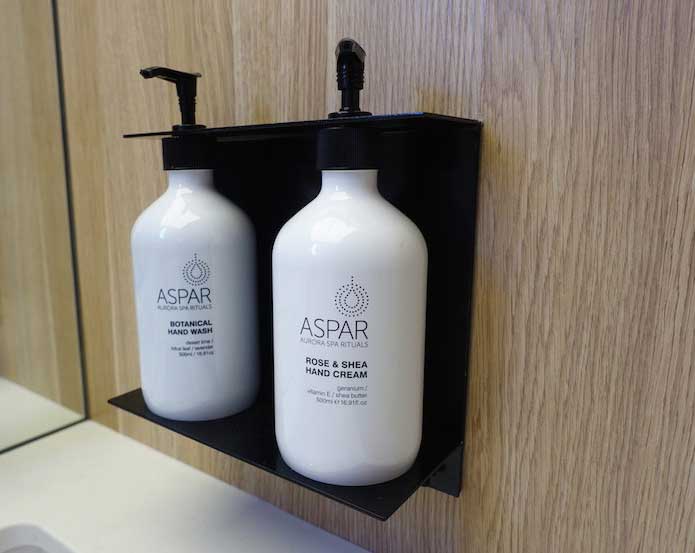
Qantas are now offering Aspar bulk dispenser in their International and Domestic Business Class lounges
Guests access their shampoo, conditioner and bath and shower gel from normal sized bottles similar to what might be used at home, but which are fitted with pump dispensers and fixed to the wall. There are no small bottles clogging up the bathroom counter and shower, and no partially used bars of soap or bottles of shampoo left to be sent to landfill.
Some hotels have also reported that many travellers find the wall-mounted pumps easier to use and guests find it usually much easer to read whether or the bottle contains shampoo and conditioner – a problem for many when trying to read in the shower without their glasses.
Other hotels report that guests overwhelmingly love the convenience of the guest bathroom liquid dispensers. Little bottles are often hard to open and bottles and caps can be messy.
When refilled hygienically, dispensers can provide exactly the same quality product at a fraction of the waste produced by single bottle use.

Lake House, Daylesford, one of Australia’s most luxurious boutique hotels offers their bathroom products from stylish large amenity bottles for guests in the wall.
2. Take It With You
Now here’s an idea worth considering.
One company has recently introduced the “Goodie Bag” which encourages guests to take their partially used hair and body care amenities with them, finish them off and then recycle them responsibly.
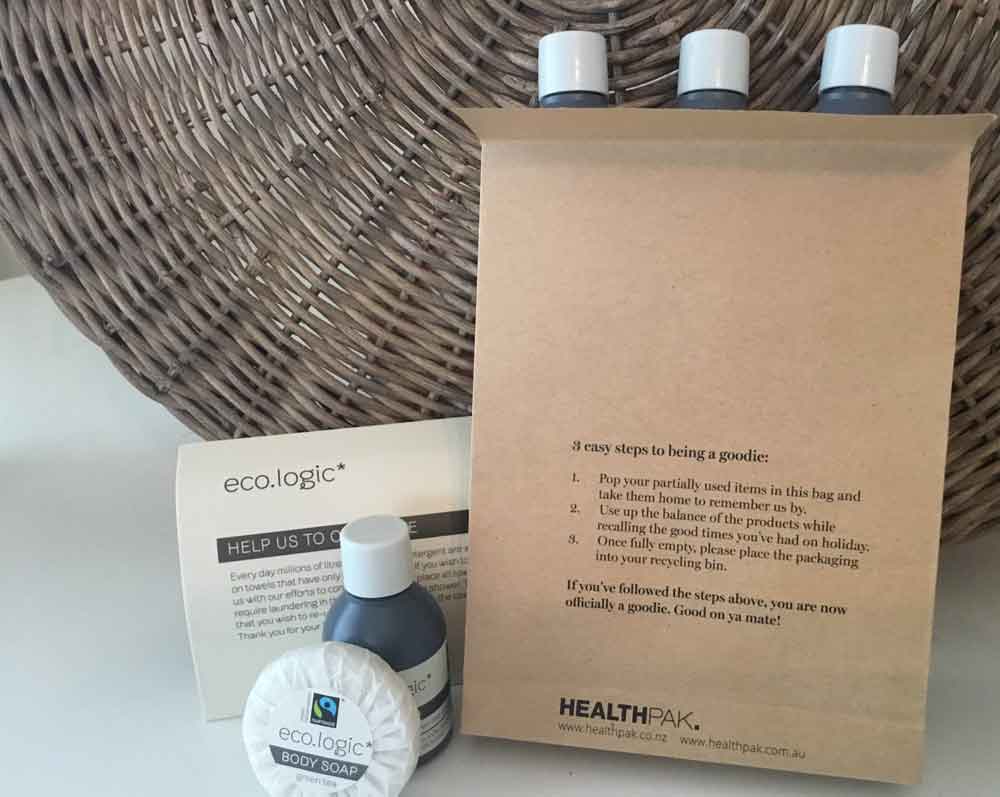
The “Goodie Bag”

What do you think? Do you like the idea of being encouraged to take the slightly-used hotel amenities with you, use the remainder of the product, and either re-use the bottles or dispose of them responsibly? Not only can this help to make sure that plastics are recycled, but also for the fact that it focuses attention on the need for guests themselves to part in solving the problem.
Find out more about the Goodie Bags here
3. Re-Purposing
To help avoid the amount of waste going into the landfill, some hotels may choose to donate leftover soaps and shampoos. Hotels then donate these unused products to companies that will sterilize and distribute them to homeless shelters, send them to other parts of the world to those that are in need of such amenities, or get converted into industrial cleaners.
Back 2 Base – a New Zealand company, has developed a soap recycling scheme whereby hotels can return partially used soaps and they’ll get them converted into Bio Diesel and biodegradable industrial cleaners.
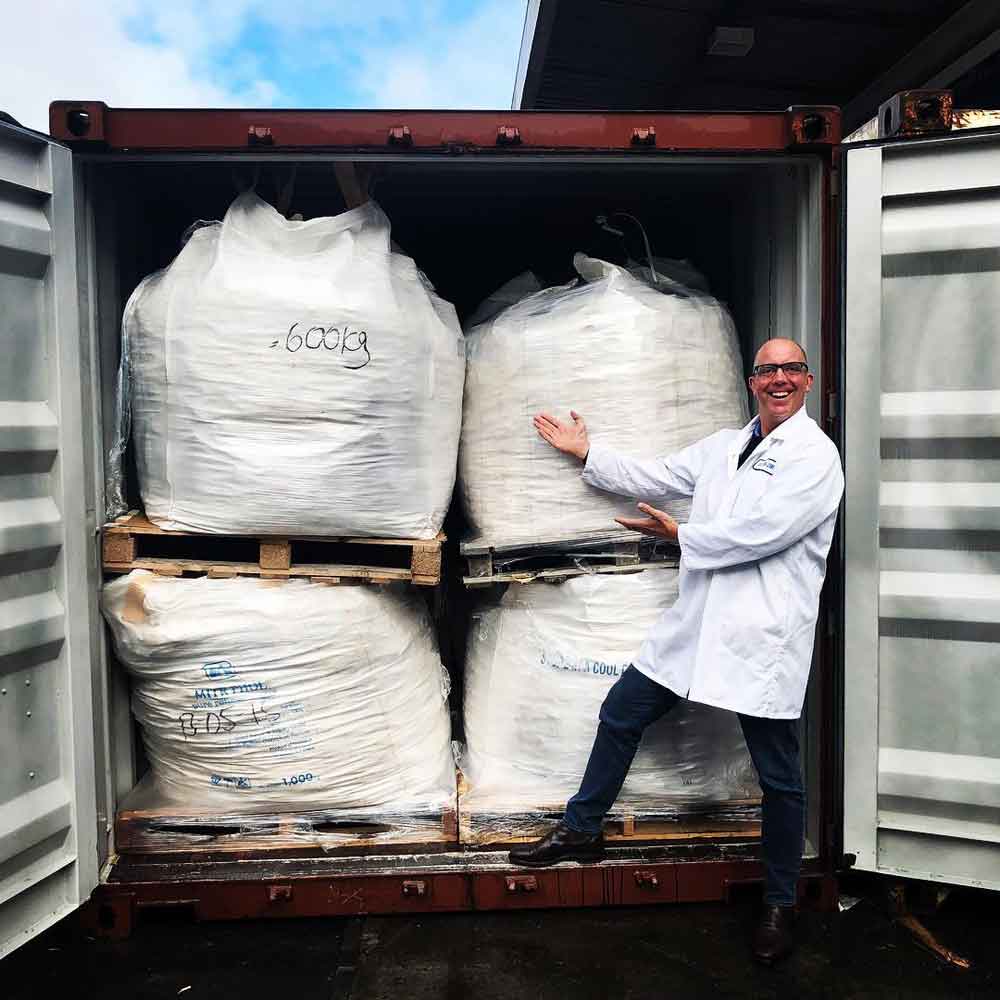
15 tonnes of partially used soaps off to start their new life as biodegradable, industrial, cleaning compounds.
Soap Aid is a not-for-profit organisation, based in Australia, committed to saving children’s lives through improved hygiene while positively impacting the environment. Their vision is to challenge the status quo and change the way discarded hotel soap is treated. Their humanitarian and environmental mission is made possible by their partnership with the hotel industry, who pay a small annual fee per room to keep the program afloat.

Soap Aid collects, sorts, cleans and reprocesses hotel soap into fresh, hygienic soap bars for distribution to targeted communities in Australia and around the world, where they work closely with local communities to provide vital hygiene education on the importance of handwashing with soap.
Through this amazing program, Soap Aid aims to achieve lifesaving and sustainable improvements in global hygiene practices. This is such a great initiative and it would be so good to see more hotels involved, as well as more information on a hotel’s website letting guests know that they are a Soap Aid partner. It could make the difference whether or not a guest chooses to stay.
4. Pay for What You Actually Need
Surprisingly, this option does not seem to be readily available. In many countries, consumers have learnt to pay for the plastic bags they use when shopping. On airlines, (like it or not) we are constantly finding that any little extras we may require come at a cost. We adjust and move on. And many guests happily pay outrageous prices for packets of peanuts and mini bottles of whisky.
Could this be one alternative offered by hotels? Apart from the necessities of soap, shampoo and maybe conditioner, could guests be encouraged to either purchase extras from reception as needed, or add them as options for sale to the minibar, along with nuts and chocolates?
5. Bring Your Own
In the end, do we really need to have little bottles in hotel bathrooms? Indeed most people I know prefer to use their own tried and tested brand of hair products when travelling and bring their own. And unless you are a frequent traveller to the same hotel or chain, you can’t be sure exactly what will be provided and so also tend to bring your own products in case.
So our recommendation? Take your own and it will be a win-win situation for you and the environment!
What Hotels Can Do
Packaging
Hotels should at the minimum, look at the biodegradable or recyclable nature of packaging. Look for hotel toiletries that come without excess packaging or, if they do, use a simple recyclable cardboard box. And if they are recyclable, there will need to be facilities provided to collect the bottles and packaging and treat them in the correct manner.

Plastic Use
If hotels still insist on providing small use-once-and throw-away bottles, a number of companies are now offering products made with 100% post consumer recycled plastic. Some have been enhanced with a product called EcoPure, to enhance biodegradability.
The Products Inside
When choosing bathroom amenities for their guests, hotels can look for shampoos, conditioners, and body wash that may be:
– free of banned parabens
– free of banned phthalates,
– free of petroleum derived ingredients
– free of paraffin
– free of diethanolamine,
– free of mineral oil
– free of silicon.
– 100% biodegradable formulations;
– not tested on animals
What Guests Can Do
Let hotels know how much you appreciate their efforts to cut down on plastic waste. Add your thoughts to your next Trip Advisor review as well, so the hotel owner knows that you think their attitude to environmental waste is important. And if all else fails, and you find yourself faced with half used bottles, take them with you, use the rest of the product, refill and re-use them for next time.
UPDATE
Intercontinental Hotel Group to get rid of Mini Toiletries
InterContinental Hotels Group, with a portfolio that includes more than 5,600 hotels and nearly 843,000 rooms, has announced it will start offering toiletries in bulk-size dispensers at all its properties by 2021 in an effort to reduce plastic waste.
The company expects that to amount to about 200 million little bottles a year.
Chief executive Keith Barr said the decision came after an announcement last year to remove single-use plastic straws from its hotels by the end of 2019.
“But that’s just a baby step,” Barr says about the straws. “The next biggest thing we saw out there was single-use bathroom amenities.”
Brands include Holiday Inn, Kimpton, Six Senses, InterContinental, Crowne Plaza and Staybridge Suites.
****************************************
Do you have any comments about bathroom amenity products and the issue of plastic waste? We’d love to hear your thoughts in the survey below!

Author: Amanda Lambert, Green Getaways

Working Towards Sustainable Tourism Accommodation: First Steps
How to Be a Responsible Tourism Operator: First Steps
In 2019, the way forward for many travellers is responsible tourism. Responsible travel is a new type of travelling, for people who want to reduce the impact that they are having on the environment as they travel. And these travellers are looking for places to stay that will help them minimise their impact on the environment.
Although this may seem a bit overwhelming at the beginning, there are a few practical steps you can take to make your accommodation more environmentally friendly. First and foremost, you will need to create an environmental policy, so you know what you are already doing and how you can improve. Your policy will need to set achievable and realistic targets will enable you to continually reduce the negative impacts of your business, while increasing the positive effects your operations have on the social and physical environment.
Water use
• Conduct a water audit to figure out where your accommodation is consuming the most water
• Offer guests the opportunity to choose cleaning of their rooms and changing of towels every second day or on request in order to avoid water waste.
Support for Local Charities or Conservation Groups
• Donate to local conservation groups, and invite your guests to do the same
• Offer information about local conservation efforts to tourists who are interested in getting involved, demonstrating how much you care about your local community
• Invite local conservation leaders to lead tours of the local environment, (or lead them yourself!) and invite guests to come along and take the opportunity to learn more about conservation.
Recycling and composting
If you intend to take responsible tourism seriously, recycling and composting are a must.
• Create a composting bin and use it to start your own garden
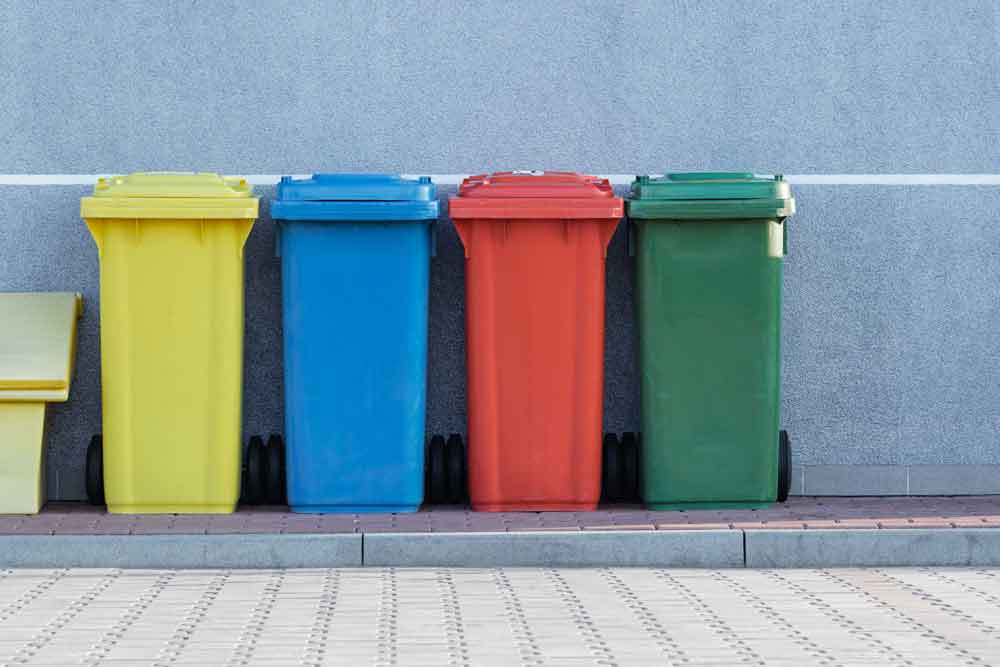
• Place recycling bins throughout your accommodation. Train your staff to use them properly, and leave information for guests to guide them on what should be thrown away and what should be recycled.
Responsible Use of Food
- Source food as locally as possible and serve food that is seasonal to your area, rather than having it transported halfway across the world.
- Serve fish that has been farmed sustainably.
- Look for food items that have a fair trade label.
Energy Use
• Install solar panels to generate your own clean electricity.
• Use timer switches and thermostats to control your heating system’s output.
• Get low-energy lighting like fluorescent tubes or LED light fittings.
• Purchase energy-efficient rated units when replacing appliances.
Responsible tourism will help your business become more successful as new marketing opportunities open up in an evolving and expanding space.
Local Economy
- Source your supplies locally to support your local community
- Recommend local guides and suggest to your guests that they eat at locally owned restaurants. Keeping the profit in the community will both ensure that the destination continues to exist and the local community can prosper.
- Supply information about public transport in the local area.
- Promote growth within your local economy by hiring nearby residents and using as many locally-sourced goods and supplies as possible.
- Showcase local products that are unique to your area, or partner with nearby businesses to cross promote local goods and services.

Local Environment
- Plant indigenous trees/shrubs in your area.
- Provide information to guests to help them understand the local ecosystem and to minimise damage to the environment, wildlife or marine ecosystems.
The positive impact made by these changes will make your efforts worthwhile.
Quite aside from the knowledge that you are helping to protect the environment, responsible tourism will help your business become more successful as new marketing opportunities open up in an evolving and expanding space. Sustainable, responsible, green, eco friendly… these words are appealing to more and more travellers who want to reduce their impact on the planet, but don’t necessarily know how to go about it. Your accommodation business can take the opportunity to allow them to do this.
And if you would like to go further, you can find more detailed information at the Global Sustainable Tourism Council

Hotel Amenities – What you need to know

September 2018
What denotes luxury to you when it comes to hospitality amenities?
With their beautiful amenities lined up on the bathroom countertop, most hotels do not immediately conjure up visions of sustainability.
But the fact is that many hotels have been making efforts to adopt better environmental practices. This is to answer the growing demand from guests for alternatives to the excessive and wasteful practices in the travel industry.
The Times They are a-Changin’
Momentum is growing globally to minimize the use of single-use plastic in the travel industry. Many travellers today are well aware of the issue and understand the need to reduce waste. That means plastic bottles of water, disposable cups, plastic laundry bags and small throw-away plastic bottles of shampoos and conditioners are starting to disappear.
What are hotels doing to reduce their plastic bathroom waste?
Hilton Hotels
“Many of our younger guests are particularly concerned about efforts to protect the environment,” says Maxime Verstraete, Hilton’s vice president of corporate responsibility.
In a survey of about 72,000 guests conducted recently by Hilton,
33% responded that they actively seek information on hospitality companies’ sustainability practices before booking. And, of that cohort, 60% conduct their own research into companies’ social, environmental and ethical practices, even if the information is not easily accessible.
“Millennials, they get really passionate about these things,” Verstraete says. “That is very important to us because these are our future travellers.”
Hilton has made a commitment to cut its environmental footprint in half by 2030.
As new brands get introduced, Hilton is adopting more stringent environmental standards. Canopy by Hilton, for instance, does not provide plastic water bottles. Instead, it has water filtration systems throughout and refillable water bottles and the new Tru by Hilton brand will have bulk dispensers for amenities rather than tiny bottles.
The Marriott
Marriott is replacing individual, small amenity bath bottles at five select-service brands in North America with recyclable 8.5-oz. dispensers containing Paul Mitchell Tea Tree products.

Marriott Hotel’s Paul Mitchell Toiletries
The company expects about 1,500 hotels in North America to participate in the initiative by year’s end. That will result in the elimination of about 34.5 million bottles and 375,000 pounds of plastic in an average year. So far, 450 hotels have started getting rid of their plastic. The brands include Courtyard and Fairfield Inn. Marriott has also removed plastic straws from 50 of its hotels in the United Kingdom.
InterContinental Hotels Group
The InterContinental Hotels Group is implementing bulk-size bath amenities across many of its brands, including Holiday Inn Express, Kimpton Hotels and Restaurants, avid hotels, EVEN Hotels, Staybridge Suites and Candlewood Suites.
Cost of Waste
What is the true cost of individual packaging waste?
Costs include:
– the initial cost for products that get thrown away when only partially used
– the housekeeping cost of daily restocking carts and rooms
– the cost of managing and paying for the waste removal for individual packaging
– and the environmental cost of continuing this cycle of waste.


Plastic Water Bottle Use: How One Hotel is Making a Difference
GREEN NEWS
How One Hotel is Making a Difference
Green Getaways
October 2018
“Grab and Go” Water – the future for hotels?
Landmark Oriental Hotel makes strides towards solving the waste caused by plastic water drinking bottles.
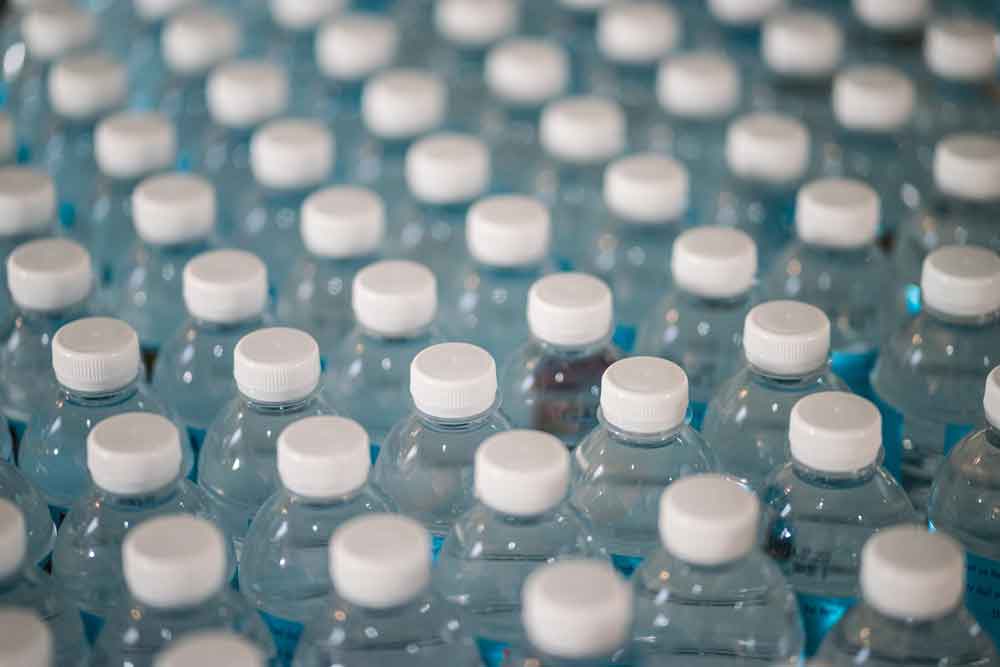
This is a great start to solving a problem which has become a growing nightmare in the hotel tourism industry: plastic water bottle use for drinking water.
The Landmark Mandarin Oriental, in Hong Kong, has installed a water filtration system for their guests. Instead of single-use plastic water bottles in the hotel’s 111 rooms, restaurants and bars, customers now have access to filtered water in glass bottles.
Nordaq FRESH water is bottled on-site using local tap water, which is purified as it passes through a patented filter system. The water is cooled and served “still or sparkling”in reusable glass bottles.

“The Landmark Mandarin Oriental, Hong Kong is proud to be the first hotel in the city to invest in the Nordaq FRESH system that enables water to be filtered on the hotel’s premises, significantly reducing the environmental impact associated with delivering water.” says Archie Keswick, General Manager of the hotel.
“Current use of plastic is simply not sustainable,” Mr Keswick says. “5.2 million plastic bottles are disposed of in Hong Kong daily. Green Earth estimates that as more than enough to fill 2 Olympic-sized swimming pools. We were using over 500 bottles a day and knew the best way to stop that was by collaborating with Nordaq Fresh.”
” We were using over 500 bottles a day.”
“Sustainability doesn’t mean sacrificing luxury,” says Archie Keswick.
“We believe we can protect the environment and maintain the highest level of guest experience and, as an industry leader, we are keen to play our part. Key to the overwhelming success of our different initiatives is explaining our commitment in an encouraging, engaging way.”
The in-house filtered, purified premium bottled water has already proved extremely popular with hotel guests well aware of the urgent need to reduce plastic waste and our carbon footprint.

The hotel has now also introduced a new compressive ‘Grab & Go’ BPA free impact-resistant bottle. Bespoke Swell stainless steel bottles in two sizes are available for sale in the guest rooms and suites. Guests are encouraged to fill their bottles at the new free water dispenser, called the Central Oasis” in the guest lobby.
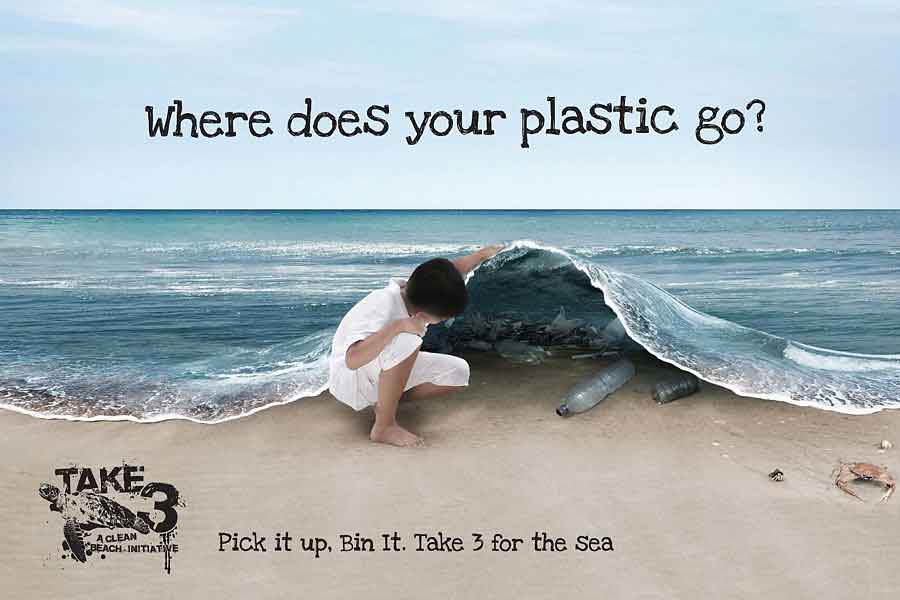
A few small steps forward – but it would be great to see other hotels follow the lead set by The Landmark Mandarin Oriental, Hong Kong. The problem of plastic waste being generated by large hotels is one which must be tackled, or we will continue to see local beaches contaminated as below in some of the world’s most beautiful destinations.
Photo Credits
Photo by Jonathan Chng
Photo by Dustan Woodhouse
Photos by Landmark Mandarin Oriental Hotel, Hong Kong
Read more about the Landmark Mandarin Oriental Hotel’s initiatives …